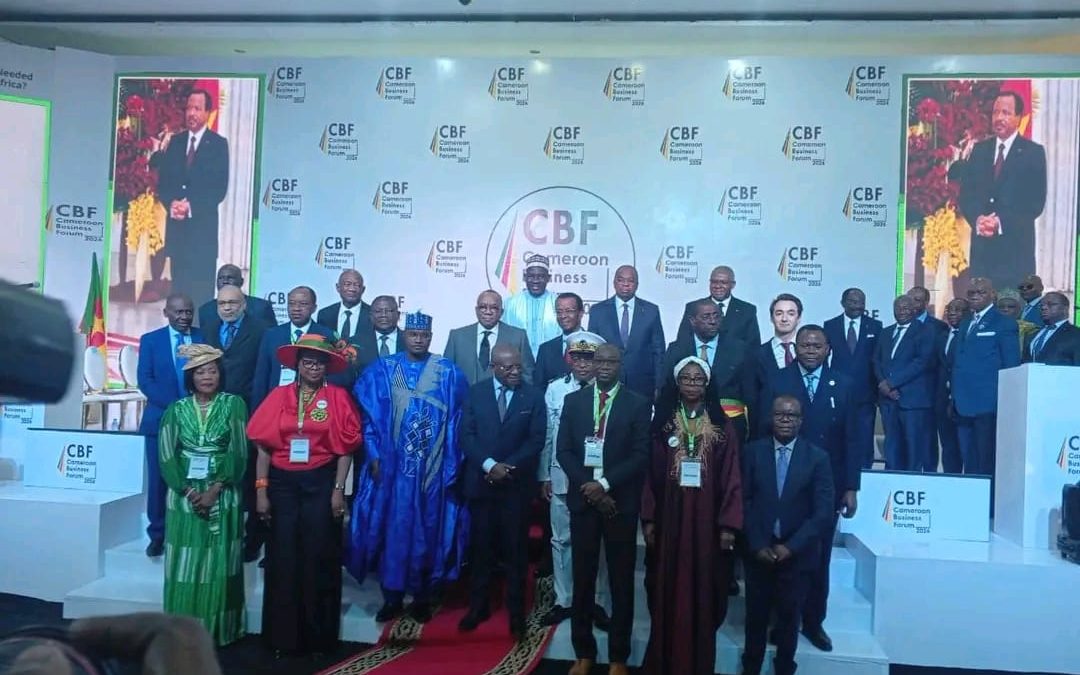
CARPA PARTICIPATES IN THE 12TH SESSION OF THE CAMEROON BUSINESS FORUM (CBF) IN DOUALA
On October 22 and 23, 2026, the Best Western Hotel in Douala hosted the 12th session of the Cameroon Business Forum (CBF), held under the effective chairmanship of the Prime Minister and Head of Government, Chief Dr. Joseph DION NGUTE. The Support Council for the Realization of Partnership Contracts (CARPA) was represented at the event by Mr. MOUYOUME Edith Clément, Legal Expert No. 2.
Held under the theme “AfCFTA and Productive Transformation: What Reforms Are Needed to Make Cameroon a Major Industrial and Trade Hub in Africa?”, the session brought together more than 300 participants from public administrations, employers’ and consular organizations (CCIMA, GECAM, CAPEF, MECAM, SYNDUSTRICAM, GFAC), as well as technical and financial partners. Established in 2009 with the support of the International Finance Corporation (IFC), a member of the World Bank Group, the CBF remains Cameroon’s leading public-private dialogue platform.
Following the introductory presentations on the challenges and opportunities of the African Continental Free Trade Area (AfCFTA), as well as the presentation of the Be Ready in Business project, discussions continued through six thematic workshops focusing respectively on economic patriotism and the promotion of “Made in Cameroon” products; facilitating intra-African trade; financing trade and industrialization; infrastructure, logistics and energy; innovation and entrepreneurship among young people and women; and reforming the CBF itself.
At the conclusion of the proceedings, several recommendations were made, including the full digitalization of customs procedures, connecting local banks to the Pan-African Payment and Settlement System (PAPSS), mobilizing the AfCFTA Adjustment Fund of Afreximbank, and ensuring the effective execution of budget allocations for strategic projects.
Particular attention was also given to the involvement of small and medium-sized enterprises (SMEs) in the development of industrial zones and logistics and energy infrastructure, particularly within the framework of major strategic projects such as the Kribi Industrial and Port Zone.