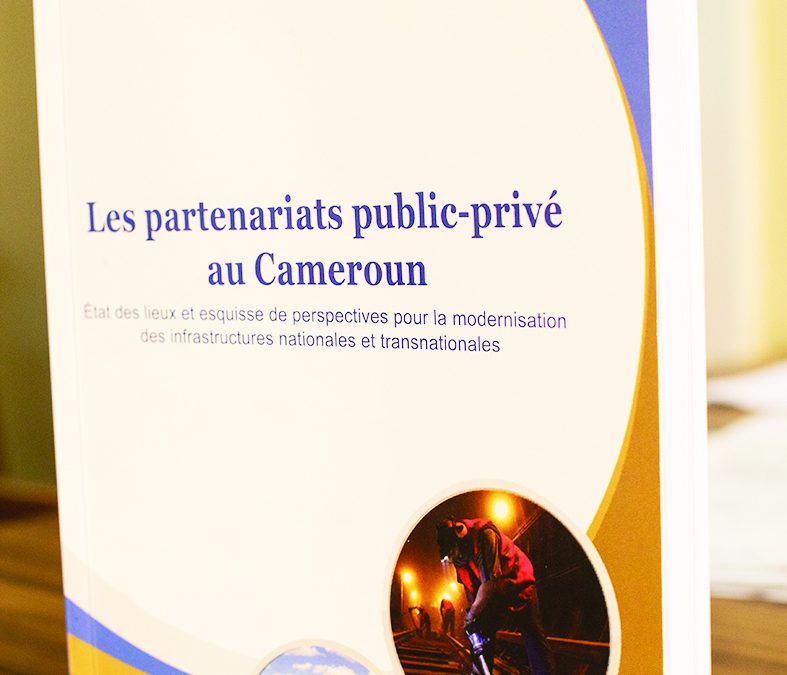
Dieudonné Bondoma provides an overview of the implementation of this concept in Cameroon in a recently published book.
“The implementation of a PPP project cannot be decreed. It is the result of sound planning, preparation and careful analysis by the competent stakeholders of a smooth, objective and transparent process. It must be integrated into a legal and institutional framework free from bottlenecks, ensuring complete clarity and predictability for every private investor.”
This final paragraph of Dieudonné Bondoma’s book, Public-Private Partnerships in Cameroon: Current Situation and Outline of Prospects for the Modernisation of National and Transnational Infrastructure, summarises the message he seeks to convey.
As President of the Support Council for the Implementation of Partnership Contracts (CARPA), an operational body involved in the contracting process for public-private partnerships (PPPs), he explains the key principles for understanding this financing mechanism. He discusses the stakeholders involved throughout the process, the projects currently being implemented, and the bottlenecks encountered, including inadequate project preparation.
In Cameroon, several steps have already been taken towards implementing the PPP concept. These include the development of a series of measures aimed at reviewing the legal, regulatory and operational framework governing PPP contracts. Another milestone is the presentation of the findings of studies to identify and assess projects that could potentially be implemented through PPPs.
In four chapters, the President of CARPA explains how to make PPPs successful. One key point is that ongoing projects under this framework cover sectors such as healthcare, electricity, urban transport, real estate and telecommunications, among others.
“However, PPPs have not yet reached cruising speed in the country, even though they have tended to become more established over time. Consequently, the impact they have produced in some developed countries has yet to materialise in Cameroon,” explains Dieudonné Bondoma in his book, published by Afrédit.
In this regard, the author seeks to demonstrate that not all projects are suitable for public-private partnerships. He states that “experience shows that the energy sector offers significant potential for projects suitable for PPP arrangements. The same applies to the transport sector.”
The author makes several recommendations, including market testing, the availability of human and financial resources, the establishment of a coherent legal framework, and the promotion of a zero-tolerance policy.