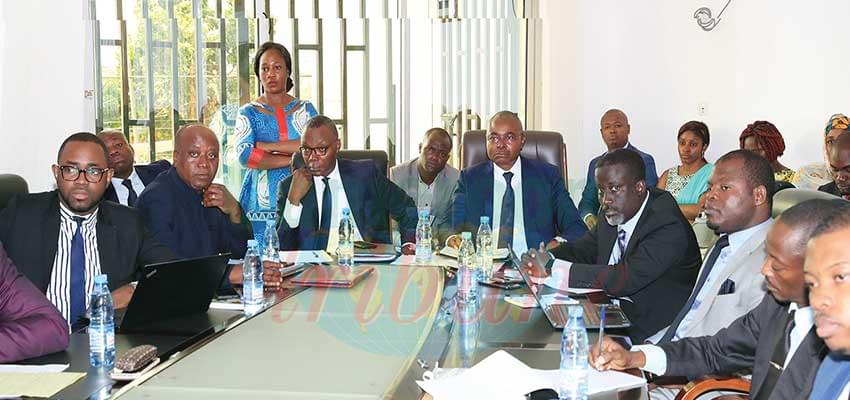
Around twenty projects have been selected under the programme being carried out by Cameroon with the support of the World Bank.
Yesterday, at the headquarters of the Support Council for the Implementation of Partnership Contracts (CARPA) in Yaoundé, a new stage was reached in the development and implementation of Cameroon’s Public-Private Partnership (PPP) programme with the support of the World Bank. The purpose was to present the findings of the work undertaken to identify and study projects that could potentially be implemented through public-private partnerships.
This is, in fact, one of the three components of the strategic plan for PPP development, which also includes strengthening the legal and regulatory framework and building the capacity of the public sector to manage PPP projects effectively. Canadian Pacific Consulting Services, the firm selected to carry out these activities, has therefore submitted its report.
After receiving 29 projects from various government administrations that could benefit from this financing mechanism, the firm selected 22 in the fields of transport, agriculture, livestock and fisheries, urban planning and sanitation, and industry.
Specific examples include the construction and operation of two dedicated bus corridors in Douala; the construction of a road located 10 km from Douala city centre, as part of the Douala bypass project, with a third bridge over the Wouri River; an aviation complex on the Yaoundé-Nsimalen Airport platform; an industrial waste treatment centre in Douala; Phase 2 of the Lolabé–Kribi–Edéa motorway; and the national animal breeding stock production centre in Ngaoundéré, among others.
The criteria used to select the projects included the level of priority assigned by the private sector, the project’s level of maturity and preparedness, ease of implementation, economic and social impact, and attractiveness to private investors, among others.
Following this stage, “the report will be submitted to the government, which will then decide, based on its priorities, whether to proceed with the recommendations as presented by the consultant or whether other factors may be taken into account in its final decision,” explained Dieudonné Bondoma, President of CARPA.
After this stage, the government will submit three projects, selected from among the approximately twenty reviewed by the consultants, to the World Bank. The institution will support these projects in their preparation for presentation to the PPP market.